The History of Trampolines

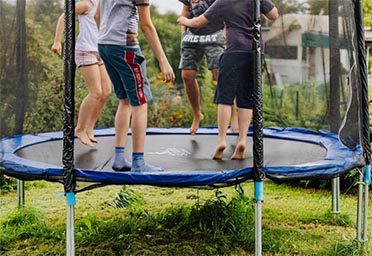
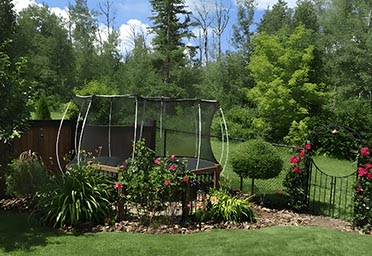
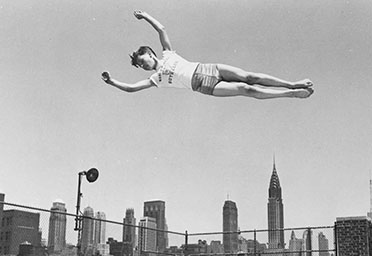
Trampolines are rapidly becoming a backyard staple, and it’s hard imagine a time when these fun, versatile tools did not have an honored place in family life. In fact, trampolines were first developed as training tools, not recreational devices. Although the modern trampoline has only been around for a short period of time, various rebounding devices have been used for centuries. Continue reading

Competitive Trampoline Gymnastics

Trampolining as a Sport

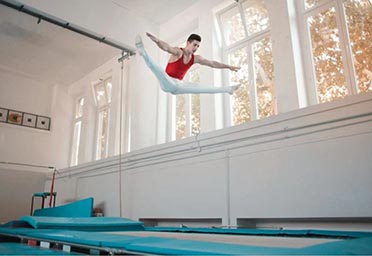
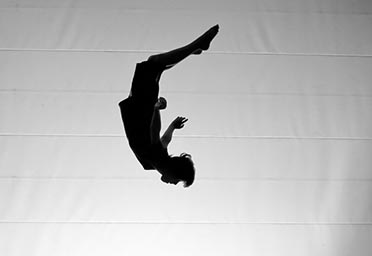
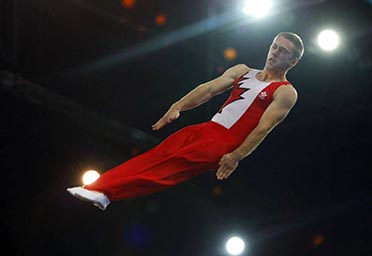
Competitive trampoline gymnastics has been steadily gaining international recognition over the years and trampoline sports have become an increasingly popular event in the Olympics. The terms “trampoline sports”, “rebound sports”, and “trampolining” are used to describe events in which trampolines are used. Essentially, these sports involve highly skilled athletes performing incredible acrobatic feats, but the individual events can greatly vary— presenting some very unique challenges to competitors. Athletes are judged by their ability to land these stunts safely and effectively without losing their balance. These demands require them to be extremely healthy, focused, confident, and capable of memorizing challenging routines.

Competitive trampolinists often begin pursuing the gymnastic-based sports when they are children. Children are naturally very limber and are frequently slim and confident in their athletic abilities. Trampoline gymnastic events are excellent and effective ways for children to develop strength, muscle control, and motor skills. As the children mature and become more skilled in their trampoline skills, many choose to make competitive trampolining a lifelong hobby.

Stunts

All competitive trampolining routines typically consist of gymnastic-based stunts. There are three basic moves in a trampoline competition. The first is aptly named the straight, and is performed with the legs and neck in a straight position while the arms are down at the sides. The second move is called a pike. Performed with both the legs and the arms arranged in a 90 degree angle to the body, this move is considerably more difficult and demands much more flexibility. The arms and the legs frequently touch the hands and feet while the athlete is in this position. The last move is called a tuck. A tucked position is performed with the arms and legs bent. The knees are pulled into the chest and the arms are securely wrapped around the legs, preventing further movement—much like a cannonball.

These moves are exhibited while the athlete is performing other feats, such as rotations, somersaults, and twists. The combination of motions and moves provide an endless amount of creativity in creating the routines and are easily adjusted for difficulty.

<u>Competitive Trampoline Equipment</u>

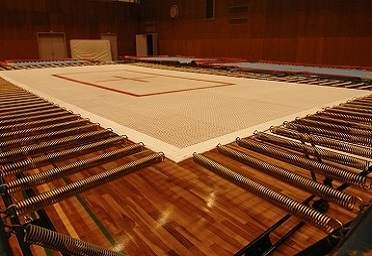
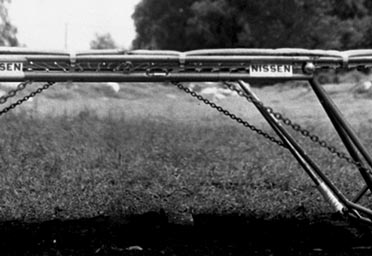
The standard competitive trampoline size measures 14 foot by 7 foot and its design differs greatly from conventional backyard trampolines. Competitive trampolines are in a square shape, rather than in a circular shape. They are composed of sturdier steel frames, stronger surface fabrics, and contain more strong coils, giving competitors a higher bouncing effect to give athletes more time to complete their stunts before landing. Advances in the construction of materials now allow competitive trampolinists to become projected up to 30 feet in the air. These powerful tools are also designed to be lightweight and portable, making them easier to transport. This is crucial for athletes who must frequently travel to get to their competitions, both locally and internationally.

Gear

For safety reasons, tight clothing is required for competitions. Leotards are imperative while competing in events, although many athletes wear close fitting shorts or t-shirts when training. Loose or baggy clothing could become caught on the trampoline or surrounding areas and could lead to loss of balance or injury. For extra stability, trampolining shoes with rubber soles are also required. Jewelry, watches, rings, bracelets, and other articles that may pose safety threats are prohibited while competing.

Individual Trampolining Events

Currently, athletes in individual trampoline competitions are required to prepare two or three routines for a panel of judges. One of these routines may involve a compulsory set of skills and stunts that are pre-decided by the panel several weeks or months before the competition. The skill sets may consist of acrobatic combinations of somersaults, difficult landings, flips, bounces, or twists consisting of tucks, pikes, or straight body positions. The age and skill level of the competitors are taken into consideration before these mandatory skill sets are imposed, although more difficult stunts that are successfully completed receives higher scores.

Each routine must contain ten different skills and must both begin and end with the competitor on their feet. Points are deducted for a low degree of difficulty, sloppy or incomplete moves, poor form, and lack of kinesthetic control. Many athletes choose this individual form of competitive trampolining because they are solely responsible for the success of their stunts, rather than depending on the success of their partner. Similarly, any fault during a competition can be attributed to the performer alone.

Synchronized Trampolining Events

Synchronized trampoline events are rapidly gaining more attention, and for good reason— this event is not only much more difficult, but, when completed successfully, is also very beautiful to watch. These events require an athlete to not only memorize intricate routines but also to execute them while attempting to become perfectly coordinated with the movements of his or her partner. Ideally, each athlete will be mirror image of his or her team member. Because of this high degree of difficulty, synchronized trampoline events are considered to be the most artistic event in the sport.

In synchronized trampoline routines, two athletes must simultaneously perform identical routines that consist of ten skills. To decrease the risk of injury and accidents, competitors perform these routines on two adjacent trampolines. Each athlete is judged on their independent level of skill in a similar manner to individual competitions. However, each pairs are also scored for synchronization. Routines are scored by the degree of difficulty and the consistency of the routine. Fewer points are taken off of the team’s score if the pair is rebounding at the same height at the same time. This competitive trampoline event is a seamlessly blended combination of group and individual events and is perfect for athletes who thrive on being part of a team.

Vuly is committed to providing top-quality trampolines and trampoline accessories for the whole family. We provide recreational and competitive trampolines. Our trampolines are tested to the highest standards and designed with safety as the top priority. For any questions or comments, please do not hesitate to contact one of our knowledgeable team members. Check out our wide selection of trampolines today!

Christie Jenkins Trampoline Champion

Focused, zealous, and exceptional in all she does–Christie Jenkins is truly a class act. Australia’s top-ranking female trampolinist has all of the expected qualities of an Olympic athlete and more, but she also has the rare ability to make it look effortless. At only 22, Christie has the confidence and focus of someone beyond well beyond her years, and strives to be the best that she can be in all areas of her life.

Christie’s history with trampolines actually began before she was born. “My parents met on a trampoline,” she said, laughing. “I guess I was born for it!” Christie found her passion in life early and became involved with trampolines when she was just five years old. Her mother bought her a backyard trampoline, and enrolled her young daughter in lessons as a safety precaution. Her love for trampolining grew, and she entered her first event several years later. “You can begin competing when you are nine,” she explains. “Until then, you’re streamlined into the sport.” All of Christie’s preparations paid off—she competed and won first place in the Victoria state trampoline championships. She described the feeling of winning as “addicting”, and her victories fuelled her trampoline infatuation.

Like many athletes, Christie made a conscious decision to take her passion for trampolining to a higher level. She was only ten years old when she knew that she wanted to be an Olympic athlete one day. “After I had decided my goal, I became devoted to training to the point of obsession,” she said. School holidays became more days for instruction; summer camp was non-existent as she prepared her new routines for her next competition. Her entire life revolved around improving her trampoline skills. “When I was younger, I didn’t think it was a sacrifice. It was all I wanted to do,” she said. It was that attitude that transformed her from a backyard bouncer into a national champion.

Christie says that she thrives on the challenge of training daily and loves her interactions with her coaches and fellow athletes. Even as a full-time uni student, she is still very involved in trampoline competitions. She has recently returned from the World Games, where she won 10th place in the trampolining event, and won first place in the National Trampoline Championships in Adelaide within the past year.

Although Christie eventually achieved her goal, she has experienced some looming obstacles that emerged when she was still a budding athlete. “My family was always very supportive of me and what I wanted to do,” she said, “but my dad lost his job whenever I was 13. Because of the financial considerations, my family told me that they couldn’t afford my competitions anymore.” Most middle school students would have given up, but not Christie. She decided that she simply would have to work harder. “I washed dishes at a cake shop, of all places,” she said. “At that point, you realize that (being an athlete) really is the thing for you. Even at that age, I knew I had to go. I had to get money so I could compete.” Her dish-washing paid off, and she competed in the World Age Groups competition later that year.

Christie has also had to crash through some physical barriers in her quest for the Olympics. She cites the 2003 World Age Groups competition as one of her most difficult competitions to date. Three days before she was scheduled to leave for the competition, Christie tore three ligaments in her ankles. As if that was not enough, she was also struck by food poisoning the morning that she was scheduled to perform her new routine. Despite her taped, damaged ankle and her poisoned body, Christie went on to perform and place in the event.

When asked about how she mentally prepares for her trampoline performances, Christie smiles. “To combat fear, I use visualization strategies. They are incredible and have helped me so much,” she said. “I was a hard time practicing some things. When learning one skill, I would burst into tears. I went to a sport’s psychologist who worked with me and helped me overcome my fear.” She contends that learning the skills is not the hardest part of her sport because most trampoline tricks come from automatic muscle memory. “Thinking about it is the worst,” she said. “It’s better when you just do it!” Other mental frustrations that she has experienced include getting confused and forgetting tricks, but she declares that athletes must push through. “You don’t want to quit when there are problems,” she said.

Today, she has expanded her attentions to coaching other young trampolinists at the Cheltenham Youth Club in Melbourne. She coaches budding trampoline athletes, ranging from six years to seventeen years, and has even started coaching adults. “I love coaching. It’s so nice to see the next generation develop,” she said. “It has definitely made me a better athlete, and it’s very rewarding.” Christie also gives private lessons to future champions.

In addition to her unparalleled trampolining skills, she is also is a standout beach volleyball player at a national level. This year, Christie and her team will compete in the Indo-Pacific Championship in Japan and have their eyes set on the World Championship in France. She said that the trampoline and beach volleyball seasons work out very well, and that both sports keep her in shape.

As if coaching, competing for trampoline events, and balancing her volleyball requirements are not enough, Christie is also a top-notch student. She was the academic dux of her school, and is currently double majoring in economics and Chinese at Monash University in Melbourne. She will graduate next year and is excited to make a bigger impact on the world.

Christie is passionate about trampolines, and offers advice for other athletes who dream of being Olympic athletes. “For trampolining, there is no rush; you can take your time learning the skills because it’s a lifelong activity,” she said. “It’s a great sport. Parents can be assured that it’s a very safe sport with a low incidence of injury. Kids love it because it’s fun!”

Christie has a bright future in front of her, and her steely determination will make its mark, both on the trampoline and off of it. “I finish uni next year, and there are other things I want to learn,” she said. “Still, there’s nothing else I’d rather be doing!”

Ben Wilden Olympic Trampoline History

At first glance, Ben Wilden may not be what you expect from a national champion. Witty, down-to-earth, and personable, his complete lack of arrogance and nonexistent sense of entitlement is definitely not what one might expect from an Australian legend. He has won countless competitions and wowed world-class judges with his intricate routines, but don’t think that he has let all of the fame go to his head. Ben’s story is one of hard work, dedication, and staying grounded along the way.

Ben’s Olympic journey started on a trampoline in his parents’ backyard in Adelaide. He has said that his father was very involved in his trampoline interests and taught him safety techniques in addition to introducing new tricks—a crucial combination of skills for his future as an Olympic athlete. Ben’s passion for trampoline sports took off. After only one week in his trampoline clubs beginner class, Ben was skilled enough for the intermediate group. Soon after, he was accepted into the advanced class. The classes fuelled his passion for trampoline sports, and he began entering competitions by the time he was nine years old. Excelling in interclub competitions, Ben soon soared to novice championships and beyond. After winning Australian state and national championships, he had secured his position as one of the most promising young athletes of any sport in Australia.

His victories were not going unnoticed. As a result of his phenomenal routines, Ben was invited to join the Senior National Squad in 2002. His acceptance into the team fuelled him to work harder, be better, and improve more. He entered more trampoline competitions and continued to set personal goals for himself. 2007 was an incredibly busy year for him as he competed in seven international competitions, collecting medals along the way. His fame grew when he won the gold medal at the World Cup for men’s synchronized trampolining that same year. By 2008, Ben blew the judges away with an incredible trampoline routine. His dreams were realized when his score was high enough to qualify him for the Beijing Olympics—an incredibly exciting achievement!

Although the qualification was an incredible honor, it was also outrageously expensive. At the time, Ben was working at a bar in Adelaide. To not go to the Olympic Games was not an option; he simply had to work harder and use his ingenuity to achieve his dreams. Ben struck a deal with his boss and created a cocktail he named “The Beijing Dream.” “I really pushed that drink,” he said. “If someone would ask what I would recommend, I would make it for them. I charged $5.00 for it and got 100% of the profits!” Through his hard work and dedication, Ben earned the funds that he needed to compete among other champions from all over the globe.

His experience on the day of the Olympic competition was absolutely heart-wrenching. He barely missed the cut for the finals. “I was very excited on the day of the competition,” he said. “I had a sore knee, but I pushed through. By the time it was time for me to compete, it was a different experience. I heard the roar of the crowd in reaction to the Chinese competitor before me, and I began to feel so nervous. Suddenly, the lights got brighter, the crowd got louder, and my legs turned to jelly.” After a disappointing first routine, Ben was grittily determined to excel in his second performance. “I had nothing to lose after the first,” he said. “I was going to do the best routine I’ve ever done or fall off trying!” His determined mindset paid off; Ben performed an unblemished routine and completed his Olympic experience by setting a personal best record. “I learned a lot from that experience,” he said. “It taught me a lot about training. If your training is correct, you can’t go wrong.” Since the Olympic competition, Ben has continued his reign as the top male trampolinist in Australia.

Although his natural talent on the trampoline is unstoppable, Ben has faced some difficulties along the way. In 2000, he began experiencing back issues. He was diagnosed with Sherman’s disease (also known as Scheuermann’s Disease) when it was discovered that his bones were too soft at the core. He could not train on the trampoline and his six month recovery was also marked by endless physiotherapy appointments and chiropractor appointments three to five days a week. His condition began to take a toll on his drive. “I became depressed and down,” he said. “I thought about quitting. At 15, I was too young to understand the mental effects of a sports injury.” Fortunately, Ben’s mental determination began to heal with his body, and he pushed through to pursue his dreams.

There are sacrifices that must be made whenever you are an Olympic athlete. “I had to give up a lot of things,” Ben said. “Because my schedule was so hectic, I had to give up my career as a jeweller. I couldn’t go to parties on the weekends with friends. Any holidays or breaks that I had were used for competitions. ” However, he said that his friends, family, and romantic partners were very understanding of his dreams. Excelling in trampoline sports has become even more important to him after his father passed away in 2009. “I do the sport as a tribute to my dad now,” he said. “It gives the sport extra meaning.”

It may be surprising that becoming a professional athlete was not something that Ben ever intended to do. “It was not a conscious decision, but that was the path that happened,” he said. “I had little goals that led to big goals. When you set those goals, you realize that you’re not far off from the big ones.”

Today, Ben is using his trampoline skills in a new and exciting way. He was recently accepted as a member of Cirque Du Soleil and is moving to Los Angeles, where he will continue to stun and awe audiences from all over the world. He is still passionate about trampolines, and offers inspirational advice to other budding champions. “You have to dream big, and don’t be afraid of your dreams,” he said. “If you want to achieve something, you have to go get it and really make it happen. Don’t listen to those who tell you cant.”

Trampolines in Sports:Slamball

Everyone knows that trampolines are excellent tools for losing weight, planning parties, and providing hours of backyard fun, but did you know that trampolines are becoming a growing fixture in many competitive team sports?

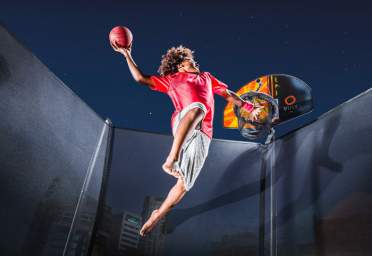
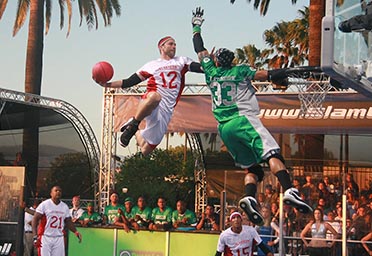
One of the hottest and most dynamic trampoline sports today is slamball. Invented in East Los Angeles, California, slamball has gained widespread attention from street basketball players and trampoline enthusiasts alike. This intense game has been aired on many television stations, including Cartoon Network, Versus, CBS, and SpikeTV. Slamball clips have been featured on The Tonight Show with Jay Leno, FuelTV, ESPN’s SportsCenter, and The Best Damn Sports Show Period. This trampoline sport has also gained notoriety in the print world, and has been featured in Sports Illustrated, GQ, USA Today, Time Magazine, and the New York Times.

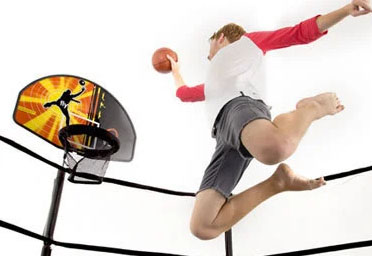
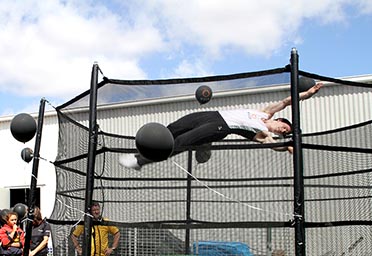
The rules are fairly simple and straightforward. The sport is essentially a full-contact version of basketball that has some very edgy modifications that guarantee a heart-pounding competition. The games are played in four 5-minute quarters and one ten minute break for halftime, making the trampoline-enhanced game very time efficient. Teams consist of eight or nine players with incredible endurance and physical capabilities. Below the padded basketball rim and backboard are four trampolines embedded in the floor that allow the launching of the players for slam dunks and other basketball stunts. Slam dunks are scored as three points, and an uninterrupted ball in the net is worth two points. This rough game permits full body contact, and a player can be physically prevented from scoring when he has possession of a ball that he is dribbling or dunking, even while he is airborne. Because of the increased bodily contact and the heights introduced by the trampoline, players must wear an array of protective gear and optional slamball helmets to avoid injury. The court is encased in glass, much like a hockey rink, to ensure the safety of both the players and the spectators.

Although some of the rules of slamball are very similar to that of conventional basketball, the use of trampolines involves some special considerations and an exploding demand of athletic skill. The shock absorbency of the trampoline beneath the net not only allows players to become easily airborne but also provides a cushioned surface on which to land. Players must possess the hand-eye coordination of basketball players, the dexterity of gymnasts, and the gritty tolerance for roughhousing of hockey players. Competitors possessing agility, kinesthetic awareness, and unparalleled athleticism are the norm—never the exception.

If you think that competitive trampolines, like the ones used in slamball, are expensive or difficult to find, think again! Vuly provides Olympic-quality trampolines and safety accessories at reasonable prices, ensuring the utmost safety and quality for both individual and group competitive trampoline enthusiasts. Our newly unveiled line of competitive trampolines have been tested at the highest quality standards and are the most durable and innovative products of their kind available on the market. Check out our extensive collection of trampolines, accessories, and safety equipment today!

Trampoline Sports

Looking for a safe and fun sport that will have your children reaching for new heights? Why not try trampoline sports?
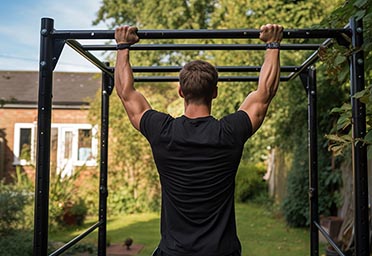
Trampoline sports are the perfect way to teach your child safe and developmentally sound aerial skills, whilst also developing co-ordination and body awareness. They will also enjoy the fun of trampolines and develop social skills whilst interacting with other children.

Children participating in trampoline sports gain and develop confident body movement, both on and off the ground, build strength and prepare the body for challenges in life, challenge the mind and body to reach new goals and develop posture and agility including the ability to land safely. Trampoline sports are conducted in safely equipped environments with accredited coaches.

So if your children are nagging you about trying something new, a new sport to participate in or just need something to do, then why not try trampoline sports? You can watch your child bounce their way to a happier, healthier future.

Trampoline, trampolines, Trampoline Sport, Sports Trampoline.

Take your step toward success with Steps 2 Stardom!

Steps 2 Stardom is a performing arts academy with two locations in Narellan and Ambarvale, NSW. The studio has been located in the Macarthur area since 1994 and in that time has built an enviable reputation for producing students with exceptional ability in all facets of the performing arts.

The dream of Steps 2 Stardom all began many years ago when sisters Cathryn and Annette Hill were as young as five and seven years of age. When they grew up, all they wanted to do was teach dancing and have a studio of their own.

In 1994, Steps 2 Stardom Dance Academy opened its doors at Ambarvale Recreation Centre. Within five years, the studio had taken over four rooms at Ambarvale recreation centre and plans for a new custom designed building were in the works.

2008 saw the beginning of a new era for Steps 2 Stardom with the opening of their second premises in Narellan. The popularity of acro/tumbling, trampolining and cheerleading over the years had grown immensely and the need for specialised premises became a necessity. The Academy now boasts 15 dance teachers, 5 acro/tumbling, cheer & trampoline teachers, 2 music teachers and 5 office staff, all of whom have an infectious passion for the performing arts.

Steps 2 Stardom has recently purchased Eurotramp olympic trampolining equipment through Vuly Trampolines. These products hope to boost Steps 2 Stardom’s division of trampoline sports in the face of increasing popularity for acro/tumbling and trampolining.

To get in touch with Steps 2 Stardom and inquire about their growing trampoline sports division, call 0414 619 125 between the hours of 9am – 9pm Mon – Sat.

Trampolines wholesale, trampoline, trampolines brisbane, trampolines sydney, trampolines melbourne.

Trampoline Sports

Are you looking for a safe and fun sport that will have your child reaching for new heights?

Trampoline sports is the perfect sport to teach your child safe and developmentally sound aerial skills, whilst also developing co-ordination and body awareness.

Trampoline sports:

  • Develops confident body movement, both on and off the ground
  • Builds strength and prepares the body for challenges in life
  • Challenges the mind and body to reach new goals
  • Develops posture and agility, including the ability to land safely
  • Is conducted in safely equipped environments with accredited coaches

Want to find out more about trampoline sports?

For information about upcoming trampoline sports events, or just trampoline sports in general, direct all inquiries to Gymnastics Queensland.

Kim Dowdell

Gymnastics Queensland Trampoline Sports Sport Manager

Sports House South – Level 3

Unit 10/866 Main Street

Wooloongabba QLD 4102

Phone: (07) 3036 5607

Email: events@gymqld.org.au

Australia Day’s Trampoline adventure!

It’s been so cold and rainy lately, and I really wish I could go outside and jump on the trampoline. Why can’t summer hurry up and get here already?

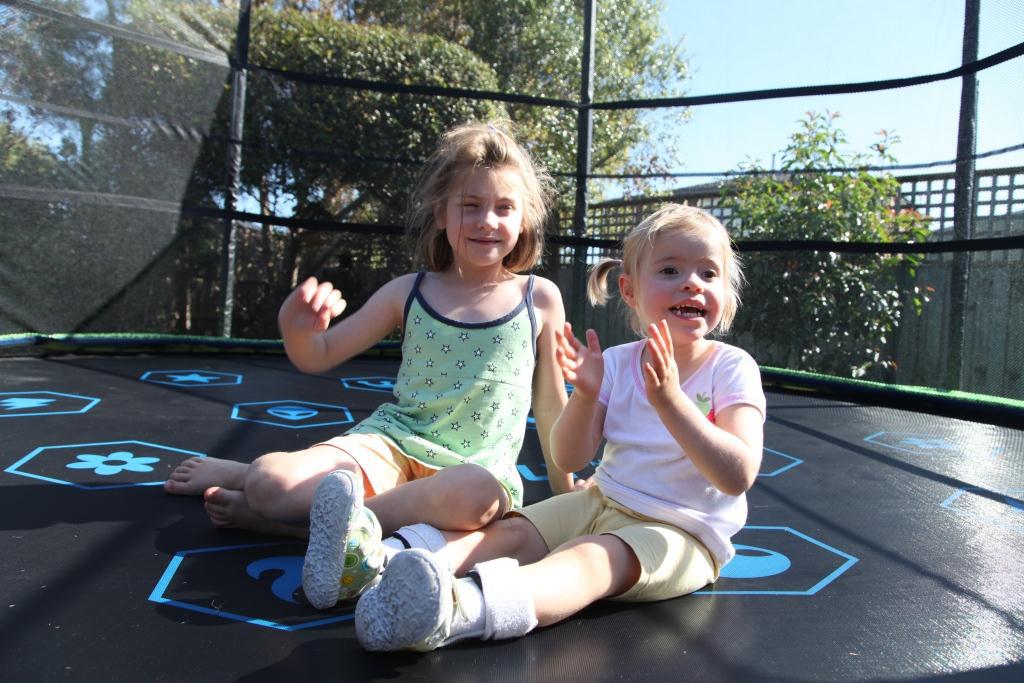
I think my favorite trampoline memory has to be jumping and playing with all of my family on Australia Day.  Trampoline games and the McKinley family have always gone hand in hand, and it’s a time-honoured tradition to have a long bounce on the trampoline whenever we get together.  Australia Day usually begins early— we have beer, music, lots of food, and of course, trampoline bouncing the whole day.  I would like to say that the kids enjoy it more than the adults, but I really do not know– Aunt Judy has always really gotten into it!  We have to be really careful to divide up the time so that everyone has  chance to enjoy it, and sometimes the family members (both kids and adults..haha!) do not want to get off of it and let someone else have a turn.  Kids start their first jumping experience when they are about six, and they keep jumping their whole lives!  I can’t wait until this year’s Australia Day so we can jump on the trampoline again!!
http://www.vulytrampolines.com/

Trampoline Competitions

Competitive trampoline sports have experienced a surge in recognition and interest in the past ten years, and trampoline sports are now recognized as a staple in the Olympics games.  Trampoline sports involve highly skilled athletes performing incredible acrobatic feats, and the individual events can greatly vary.

All competitive trampoline routines consist of gymnastic-based stunts.  Thee three basic trampoline moves that are expected in these routines consist of the straight (the body resembles a straight pole), the pike ( the legs and arms are arranged at a 90 degree angle to the body), and the tuck (the knees are pulled into the chest and the arms are wrapped around the legs—like a cannonball).  Trampoline competitors create routines around these three moves and are judged on their flexibility, agility, and performance.

Trampoline competitors use powerful rectangular trampolines that measure 14 foot by 7 foot.  These sturdy devices feature thicker steel frames, stronger surface fabrics, and contain more strong coils to give competitors a higher bounce.  These performance trampolines can be incredibly dangerous for inexperienced athletes and are strongly discouraged for general family use.

Have you ever watched trampoline sports on TV?  What do you think about these incredible feats of athleticism?

http://www.vulytrampolines.com/