Trampolines and Special Needs Children

It has been proven that regular trampoline use promotes weight loss, detoxifies the body, and strengthens the immune system. However, many people do not realize that rebounding on a trampoline can dramatically improve the lives and behaviors of individuals with special-needs. This innovative recreational tool is rapidly gaining popularity in special education programs around the country. Known for their fun possibilities and many uses, trampolines are an excellent way to foster ingenuity for special-needs individuals and their caregivers.

Many parents and guardians recognize the benefits of trampoline usage in helping special-needs children learn valuable life skills. Parents, teachers, and guardians must be endlessly creative to reach special-needs children and may find that unconventional methods, such as teaching children while they are on a trampoline, are very useful in encouraging the basic skills needed for the real world. Autistic children are frequently exceptional in their skills, and incorporating trampolines in their coursework can be a healthy, effective method of teaching while discouraging undesirable behavior.
Here are just a few benefits that trampolines can offer to your special-needs child:

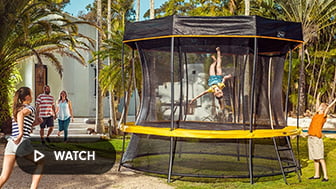
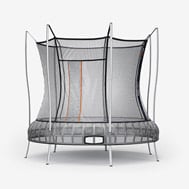
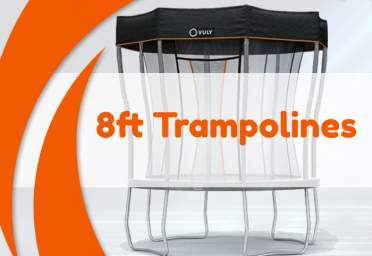
  • Trampolines can regulate and advance special-needs children’s sensory skills. Children with autism or Asperger’s syndrome frequently feel overwhelmed by stimuli, leading to added stress and undesirable behaviors. However, a trampoline with an overhead tent attached can provide a wonderful “safe place” for autistic children to calm down enough to resume their normal activities. Vuly supplies small trampolines that are highly portable, making them convenient to store and transport. Mobile “safe places” can be a great comfort for special-needs children when they are away from their usual environments.
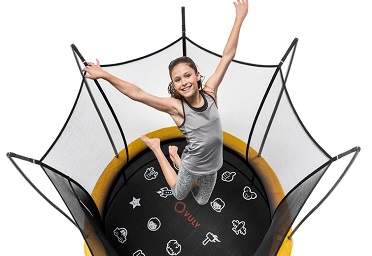
  • Trampolines are also fantastic for increasing sensory awareness and improving motor skills. Rebounding encourages muscle development, strengthens bones, reinforces joints, improves balance, and foster’s kinesthetic awareness. Children who feel the confidence and wellness of a fit body are more likely to play outside and rid themselves of excess energy and are less likely to become injured during play. Bouncing on a trampoline stimulates almost every sense, leading to a more involved interaction between the special-needs individual and the outside environment. Trampolines feel good to special-needs children because they can provide unparalleled proprioceptive input (awareness of one’s body situation) and vestibular motion feedback (the body’s response to movement as it is traveling through space). Many autistic and special-needs individuals’ bodies have a decreased ability to naturally organize the senses, but jumping on a trampoline can integrate the body’s systems in one simple movement.
  • Due to their complex capabilities, many special-needs children find learning at a desk in a traditional classroom difficult. They may be able to more effectively learn when they can reinforce their intellectual development with physical movements. For example, a teacher may draw words on the jumping mat of a trampoline with sidewalk chalk and have their special-needs student jump from one word to another to form a sentence. Other activities may include the teacher coloring certain sections with chalk and calling out the name of the color as the child puts his or her foot on it. Variations on these games can vary and are easily adjustable, easily accommodating a special-needs child’s skill level.
  • Trampolines can also be a very useful tool for teaching children how to listen to directions. For example, a teacher may ask the child to jump three times, or jump to the right and then the left. Or, a parent may play “start and stop” games with the child in which the parent gives a signal (“Start!”) to indicate that the child is to begin bouncing. After a few rebounds, he or she may say, “Stop!” and physically encourage the child to refrain from rebounding. The connections between “stop”, “start”, and their respective expectations can be extremely important in other social situations. Other direction-oriented games might include “Simon Says”. Higher functioning individuals may find great joy and dedication to pattern-based games; that is, the supervisor gives the jumper a series of motions in a pattern to complete (Example: Two jumps, one bottom bounce, three jumping jacks, six knee bounces, repeat).
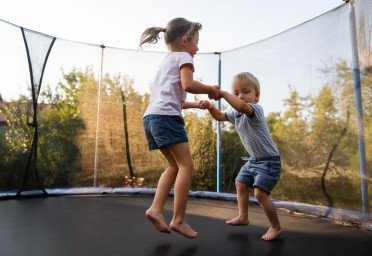
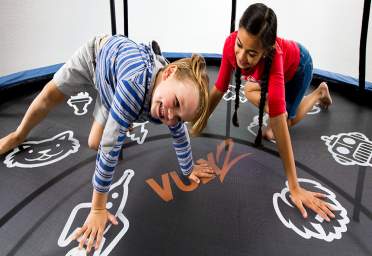
  • Many autistic and special-needs individuals struggle to relate to others and are often described as being trapped in their own little world. Trampolines are invaluable tools for encouraging interaction between the children and the parents. Although Vuly strongly advocates allowing only one jumper on the trampoline at one time, parents can play alongside their children on the groudn while they supervise. Simple games like clapping or counting time to the bounces, making up songs, or playing “Monkey Says, Monkey Do” to encourage healthy, fun interaction between many parents and special-needs children. Creative parents and siblings of children must be creative in order to develop games, but the possibilities are endless with versatile tools like trampolines.
  • Impulse control is frequently a problem with autistic and special-needs children, and they often experience difficulties when trying to curb their reactions. Regular exercise on a trampoline can provide an outlet for children to expel energy, leading to an increase in concentration. The improved circulation brought on by strenuous exercise increases the amount of oxygen to the brain, making the child feel alert, refreshed, and more capable of focusing on necessary tasks. The weightlessness of the rebound can have a freeing effect, leading to a more relaxed state of mind. Additionally, heart-pumping exercise leaves individuals with naturally mood-enhancing chemicals that lead to a more positive state of mind.

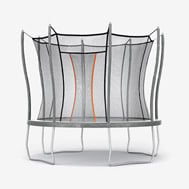
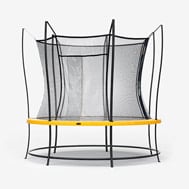
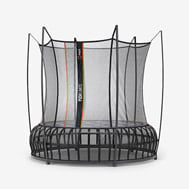
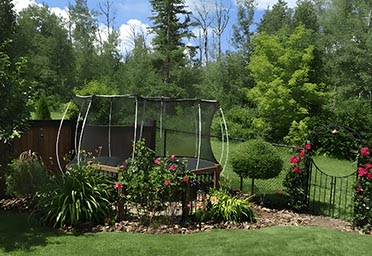
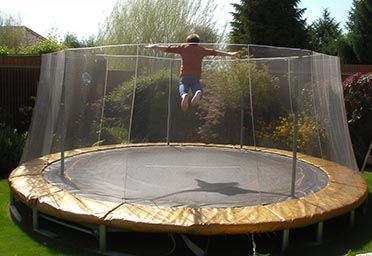
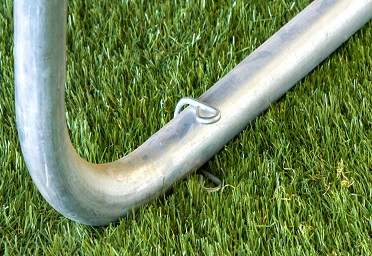
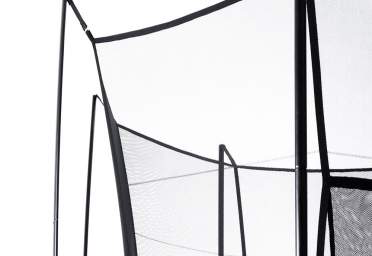
There are countless benefits for incorporating a trampoline into your special-needs child’s life, but there are also some additional safety guidelines. Vuly strongly suggests fitting your trampoline with a safety net. While this is important for every jumper, it may be especially important for special-needs individuals. Our safety nets are made of top-quality material and firmly zip closed, eliminating the chances of accidental falls. Because of the chance of erratic behavior, some parents or guardians might find an anchor kit to be useful addition to their trampoline kit. Individuals with autism, Asperger’s Syndrome, and other special-needs diagnoses need to be carefully supervised at all times. Parents need to be especially in-tune to their child’s visual clues for overstimulation. These could include drooling, erratic behavior, and anything that looks like the child is feeling endangered.

Vuly provides a wide range of high-quality trampoline and accessories that are suitable for the whole family. Check out our stock and rebound to wellness today!